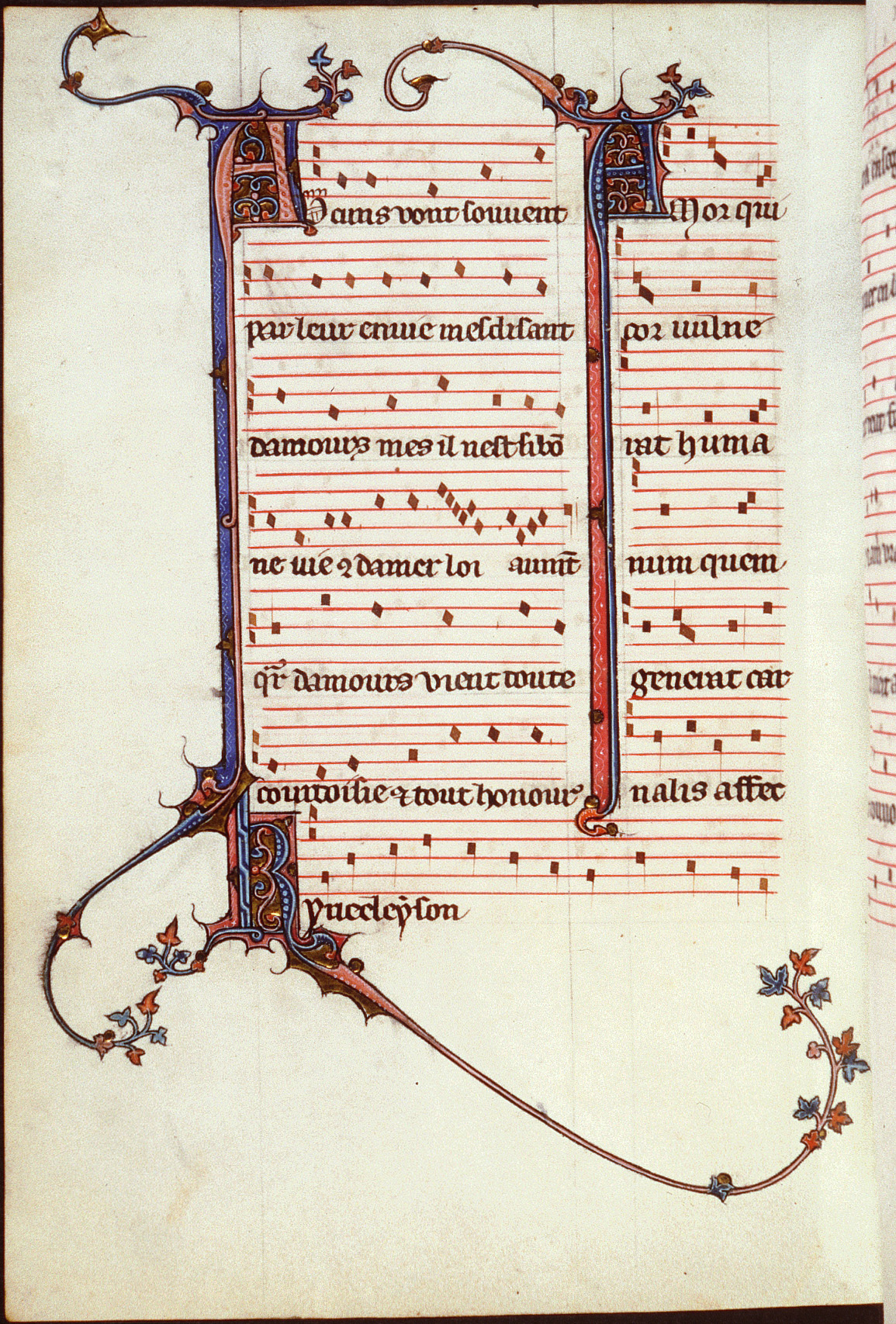
| Kyrie eleyson. |
Lord, have mercy. |
Lord, have mercy upon us. |
|
|
|
| Amor, qui cor vulnerat |
Love, which wounds |
To injure lovers fated, |
| humanum, quem generat |
the human heart, |
By carnal lust created, |
| carnalis affectio, |
love, which carnal lust creates, |
Love never has existed |
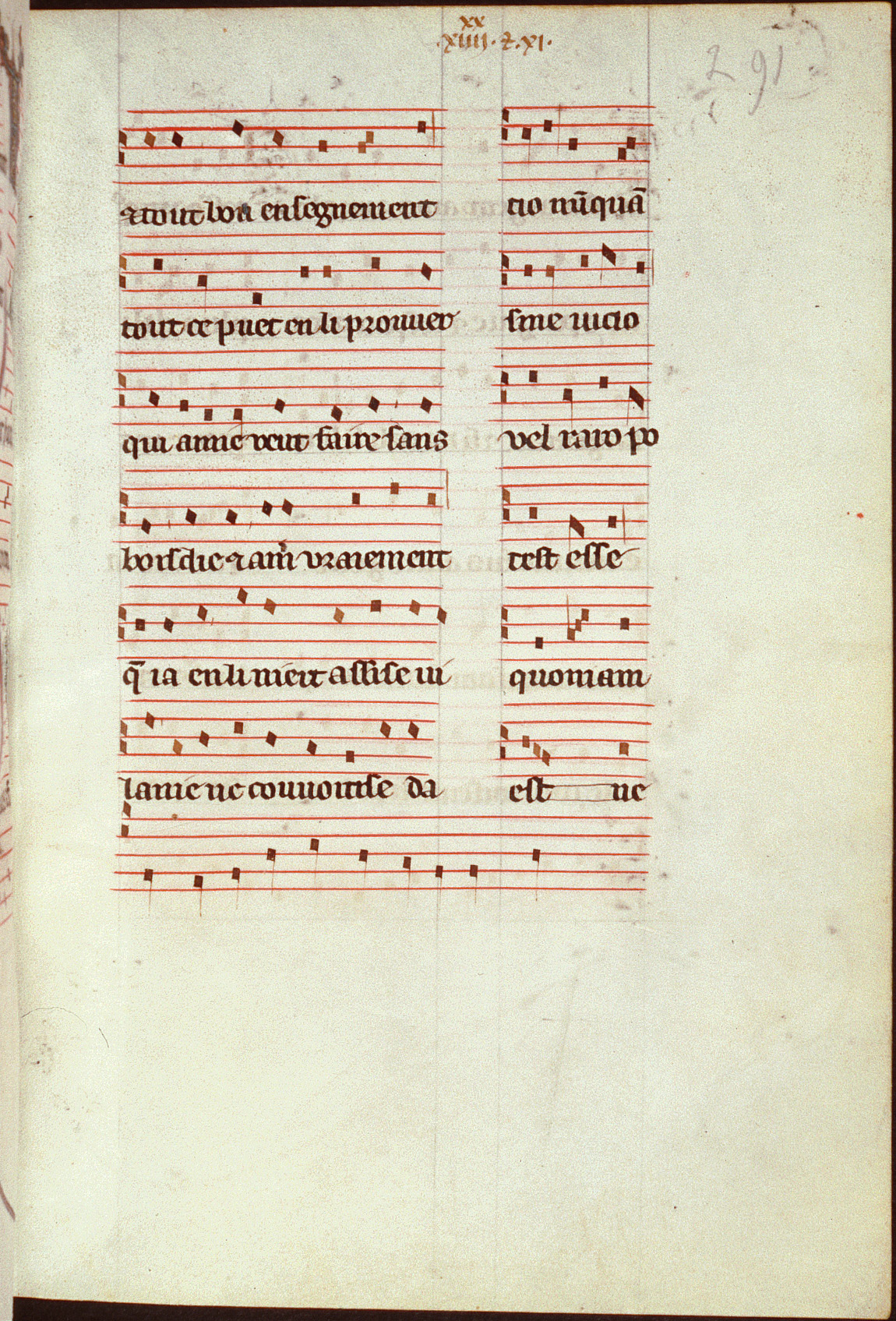
| numquam sinevicio |
never or rarely |
Without the cold and twisted |
| vel raro potest esse, |
can exist without sin, |
Effects of sin, for surely |
| quoniam est necesse, |
for it must be |
The more love given purely |
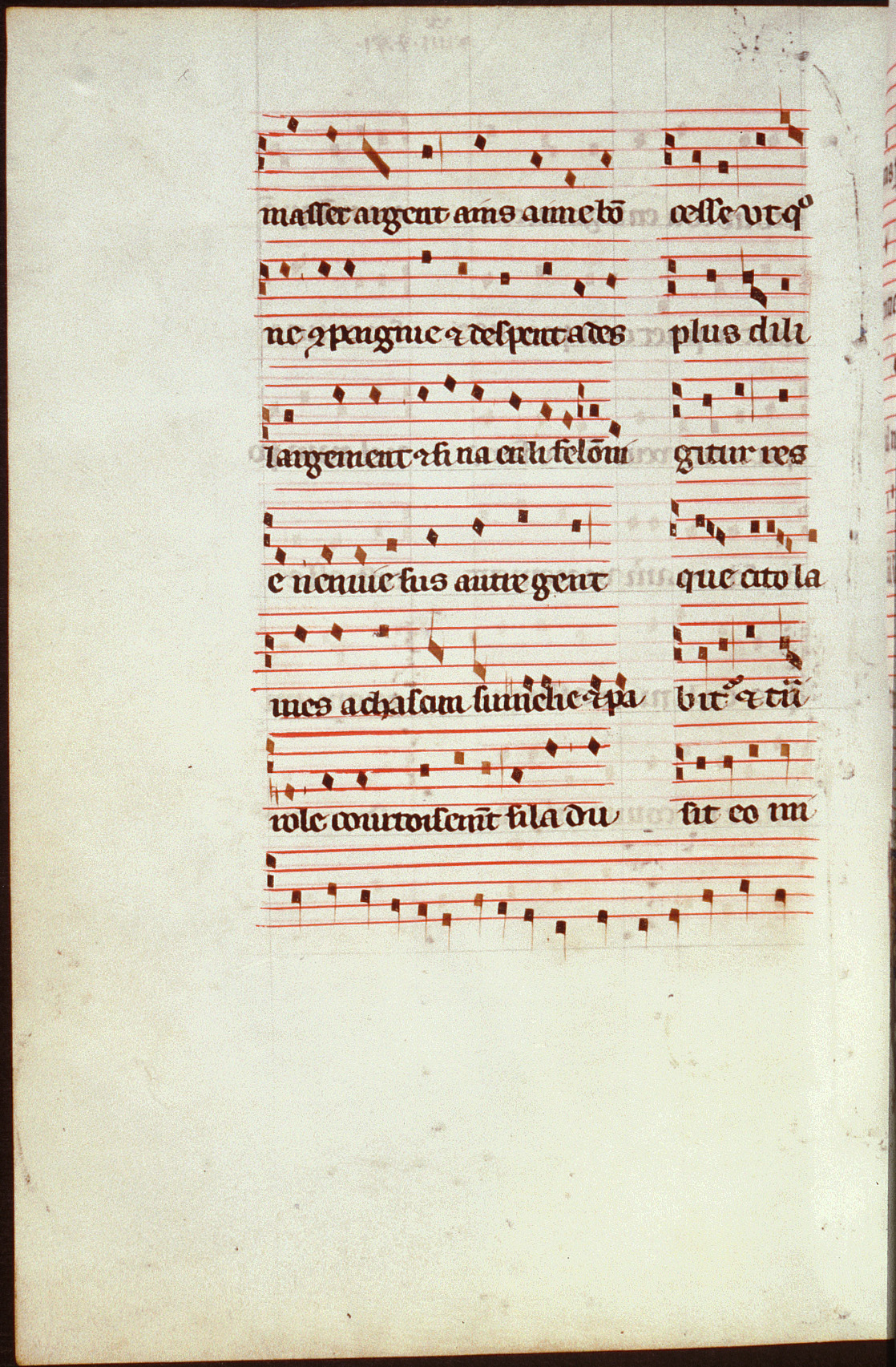
| ut quo plus diligitur |
that the more |
To anything that passes |
| res, que cito labitur |
a thing which quickly decays |
Away like fragile grasses |
| et transit, eominus |
and passes away is loved, |
And to decay is driven, |
| diligatur Dominus. |
the less the Lord is loved. |
The less the Lord is given. |
|
|
|
| Aucuns vont souvent |
Some often go around |
Some say publicly |
| par leur envie mesdisant |
badmouthing love out of envy, |
Bad things about love from envy, |
| d’amours, mes il n’est si bonne vie |
but there is no life as good |
And yet there is no life as good for you |
| com d’amer loiaument; |
as loving loyally; |
As loving loyally, |
| quar d’amours vient |
for from love comes |
For from love all |
| toute courtoisie |
all courtesy |
Courtesies soon grew, all |
| et tout honour et tout bon ensegnement. |
and all honor and all good upbringing. |
Honor and all good upbringing came to be. |
| Tout ce puet en li prouver, qui amie |
All of this can be shown by one who takes |
All of this can be seen in a person who |
| veut faire sans boidie |
a sweetheart without deceit |
Loves someone and is true |
| et amer vraiement, |
and loves truly. |
And loves in purity. |
| que ja en liniert assi se vilanie |
Villainy will never reside in him, |
Villainy never is found in what he may do, |
| ne couvoitise d’amasser argent. |
nor will the desire to amass money. |
Nor does he desire to gather money. |
| Ains aime bonne compaignie |
Rather, he loves fair company |
Rather, his friends have fair virtue; |
| et despent adés largement; |
and always spends money generously, |
He spends money generously, |
| et si n’a en li felonnie |
and there is in him no ill will |
And no ill will does he have in view, |
| n’envie sus autre gent, |
nor envy toward other people, |
Nor for anyone envy, |
| mes a chascun s’umelie |
but he humbles himself |
But he humbles himself, too, |
| et parole courtoisement. |
and speaks courteously toward other people — |
Speaking to all courteously, |
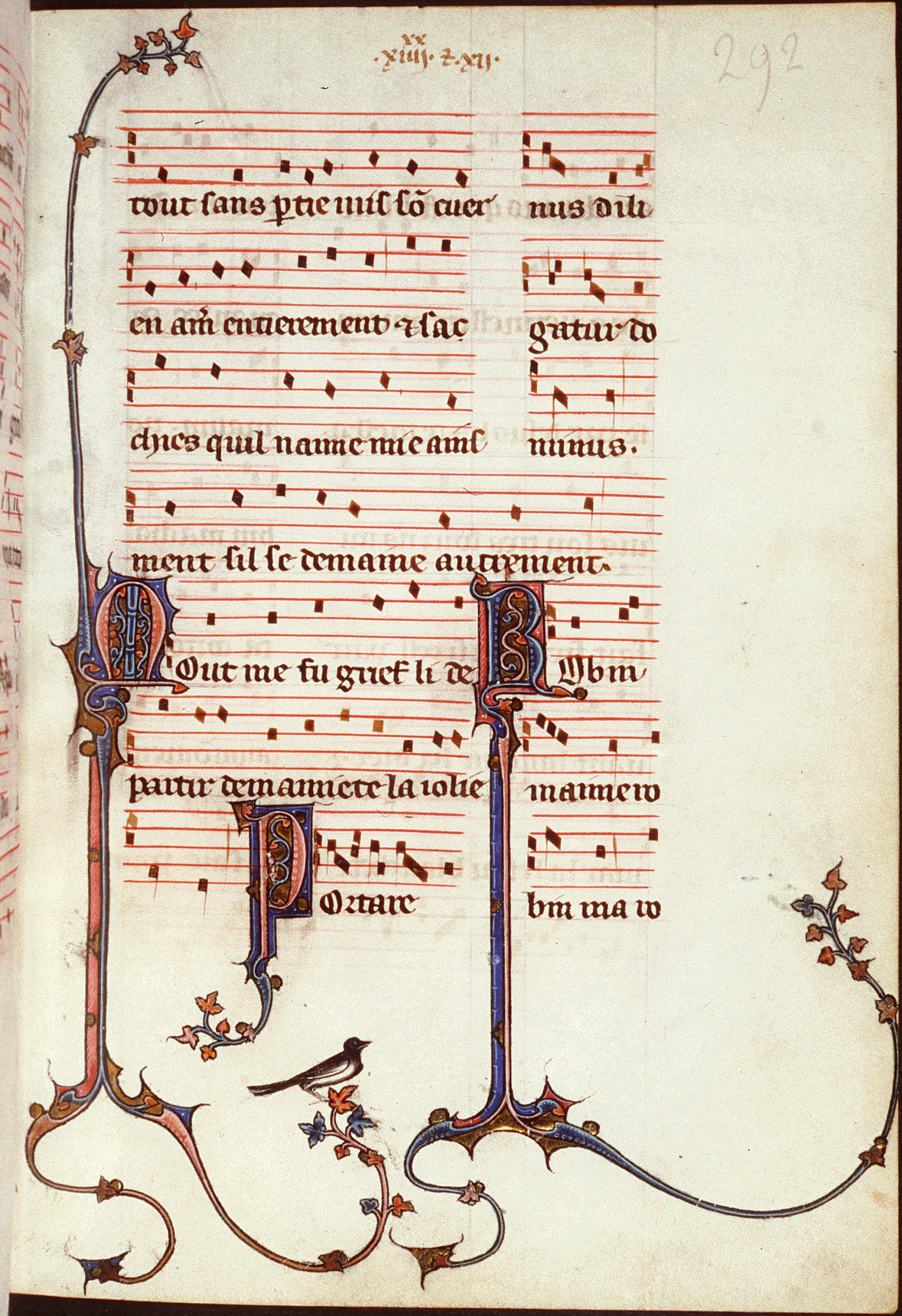
| S’il a du tout sans partie |
if he has wholly, without exception, |
If he set his heart all through |
| mis son cuer en amer entierement; |
set his heart entirely on loving. |
On loving without exception, entirely. |
| et sachiés, quil n’aime mie |
And know that he who conducts himself otherwise |
If these things he does not do, |
| ains ment, s’il se demaine autrement. |
does not love at all; rather, he lies. |
He has not love, but dishonesty. |
|
|
|
| Petrus de Cruce |
Stolba, K Marie, ed. The Development of Western Music: An Anthology. 3rd ed. Vol. I. Boston: McGraw-Hill, 1998. Print. |
Carol Anne Perry Lagemann |